
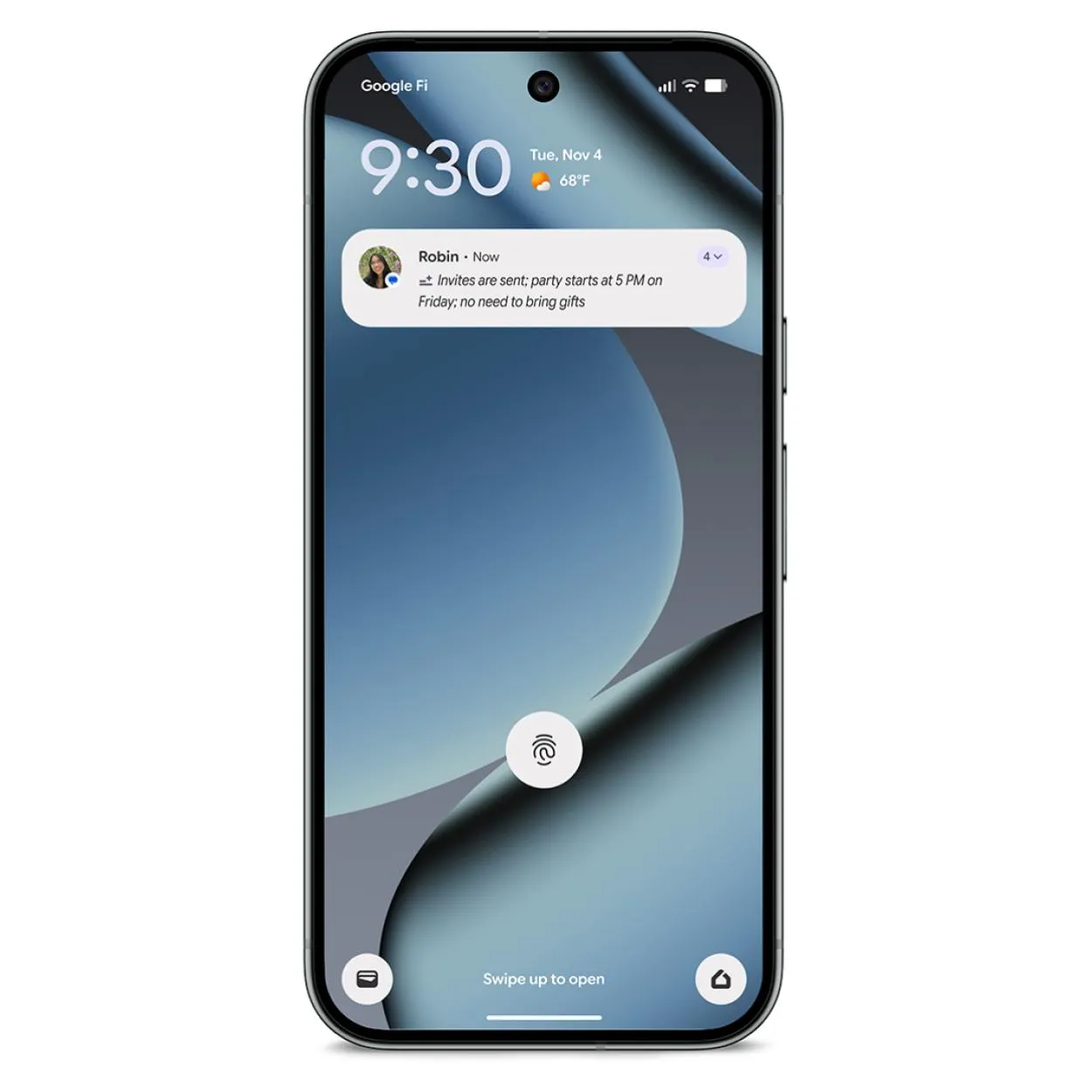
Every push notification ever sent to a phone has travelled through one of two pipes: Apple’s APNs, which shipped with iPhone OS 3 in June 2009, or Google’s messaging service, now Firebase Cloud Messaging. In a detailed analysis of the channel, writer Jacques Corby-Tuech argues that both companies have shifted from simply relaying those messages to actively editing them — and that the companies sending notifications have almost no way to detect it.
The argument is that the technical capacity to intervene was always there; what changed is the willingness to use it. A rough timeline supports the point. Android 8 introduced notification channels in 2017, letting users mute individual categories from an app. Apple restructured interruptions in iOS 15 with Focus, Scheduled Summary and a four-level priority taxonomy. Android 13 then made notification permission an explicit runtime grant in 2022, and opt-in rates fell sharply afterwards — Batch’s 2025 benchmark, drawn from a very large message sample, put Android opt-in at 67 percent, down from 85 percent a year earlier.
The newer layer is generative AI running directly on the handset. Apple Intelligence uses a roughly 3-billion-parameter on-device model with small task-specific adapters, one of which handles notification summarisation; Google’s equivalent, Gemini Nano, runs inside the AICore system service. Where these features are switched on, the operating system can bundle several alerts together and replace the original wording with a generated line — an edit that happens after the payload leaves the sender’s control.
That editing is not always accurate. After the BBC complained that AI-generated summaries had produced false headlines, Apple disabled the feature for News and Entertainment apps in iOS 18.3, began showing AI summaries in italics and added a per-app switch on the lock screen.
Corby-Tuech’s sharpest point is about measurement. Neither APNs nor FCM reports whether a notification was summarised, demoted by a ranking model, filed into a promotions section or suppressed by a Focus mode. Senders see submissions accepted and taps recorded, with a dark gap in between — a situation he compares to email marketing after Apple’s Mail Privacy Protection broke open-rate tracking in 2021, except that push has no equivalent of Google Postmaster Tools to fall back on.
Not everything is affected equally. Messages from real people, genuinely time-critical alerts and live-status surfaces such as iOS Live Activities largely pass through untouched, because they render outside the notification tray or because users clearly want them. The editing falls hardest on broadcast and promotional sends.
His practical advice follows from that asymmetry: lead with the concrete fact rather than brand voice, so a summariser has something worth keeping; ask for notification permission in context rather than on first launch; treat dashboard engagement figures with suspicion; and move non-urgent messaging to surfaces inside the product, which no on-device model stands in front of.
Looking further out, he expects assistants to begin acting on notifications rather than merely displaying them — at which point the notification becomes a trigger for an agent, and the click-through rate that anchored a decade of push measurement loses much of its meaning.
Source: Jacques Corby-Tuech

Leave a Reply